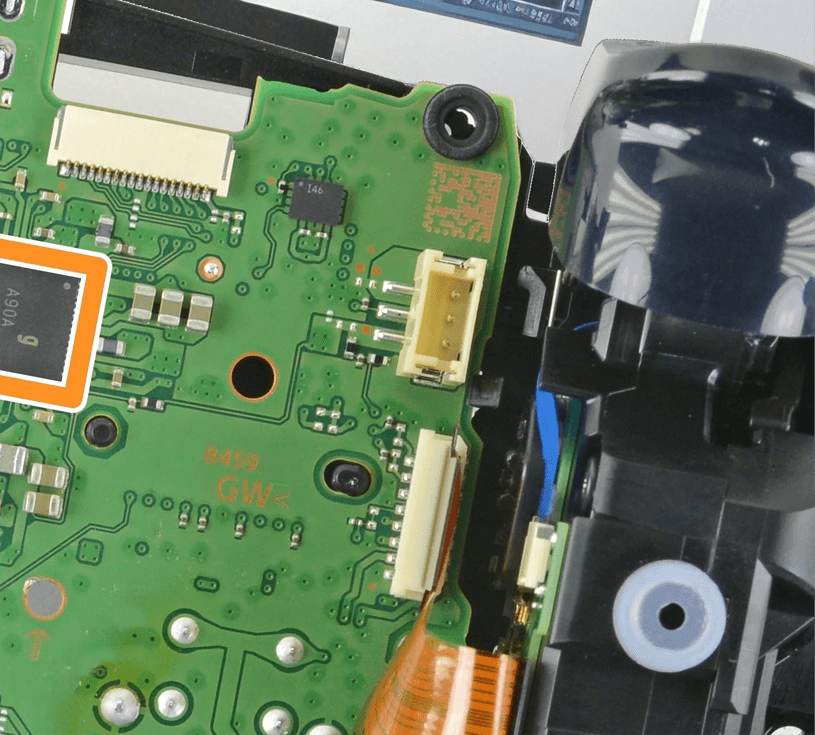
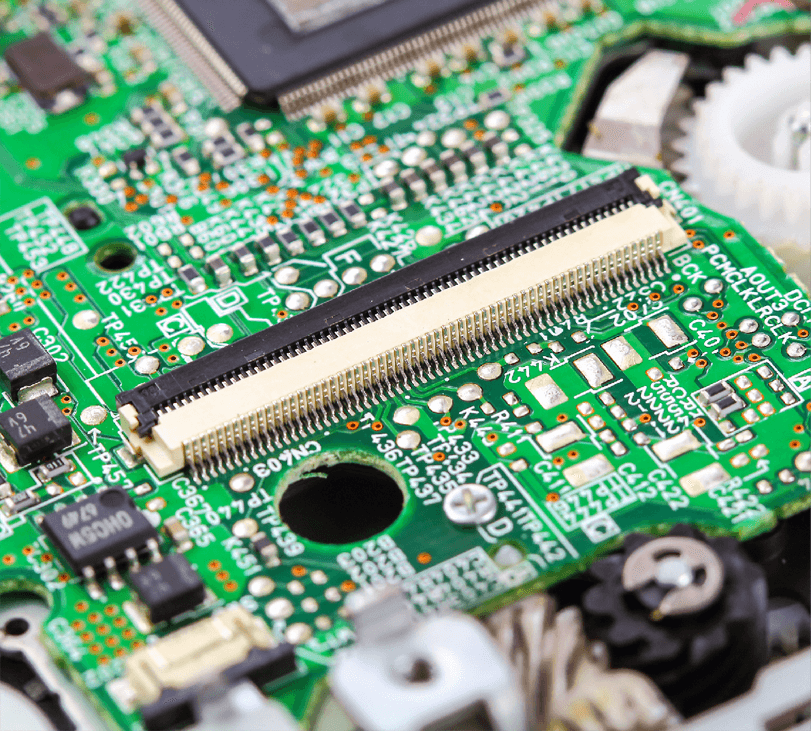
Wire-to-Board Connectors
Board-to-board (BTB) connectors are used to accurately interconnect printed circuit boards (PCBs) in a stackable manner. They can accommodate various types of PCB orientations, relative distances, and space constraints to allow for design flexibility. In addition, multiple materials, plating finishes, and pitches are available to meet electrical and mechanical specifications. Depending on the purpose of the interconnect, connectors are further offered as high-speed, floating, or power. To achieve the desired performance, all the above should be considered when designing an interconnect system.
Wire-to-Board Connector Types
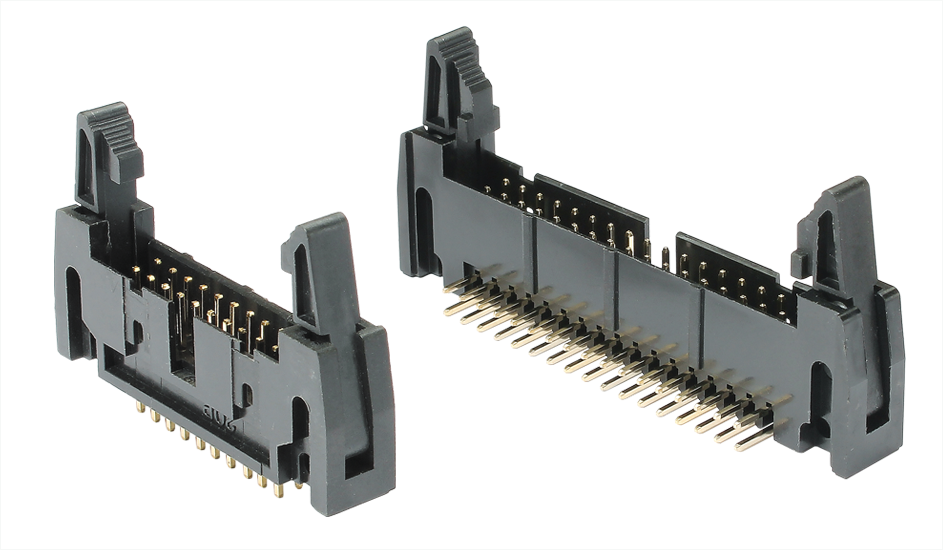
Ejector Headers
Greenconn's ejector headers are connectors that provide an ejector mechanism for easy connects and disconnects. These connectors are also polarized making it impossible to incorrectly plug in the mating connector during the connection process.
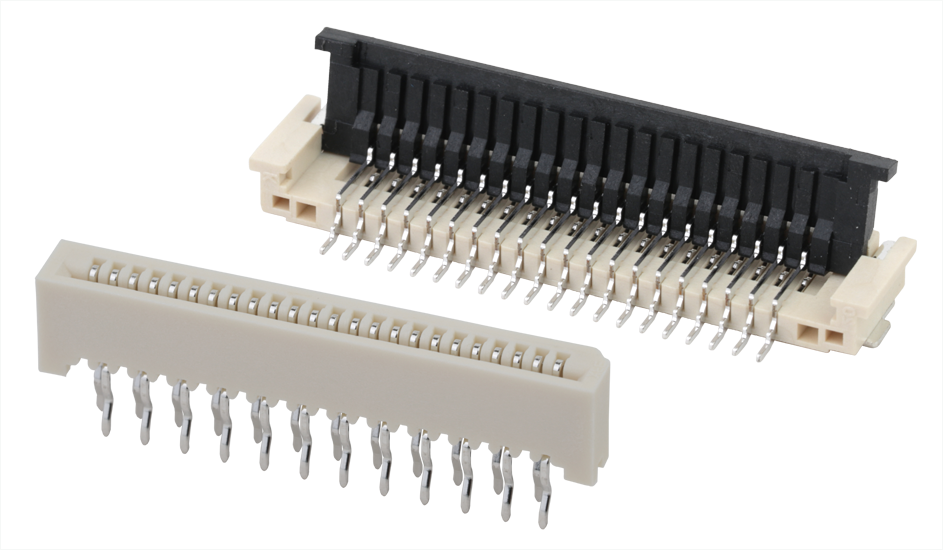
FFC / FPC Connectors
FPC (Flexible Printed Curcuit) or FFC (Flexible Flat Cable) Connectors are cables that closely resemble a ribbon and are typically made of a flexible plastic or film with a metallic connector at the end. This type of connector offers a high level of signal reliability, compact design, with a wide variety of size and cable options.
IDC Connectors
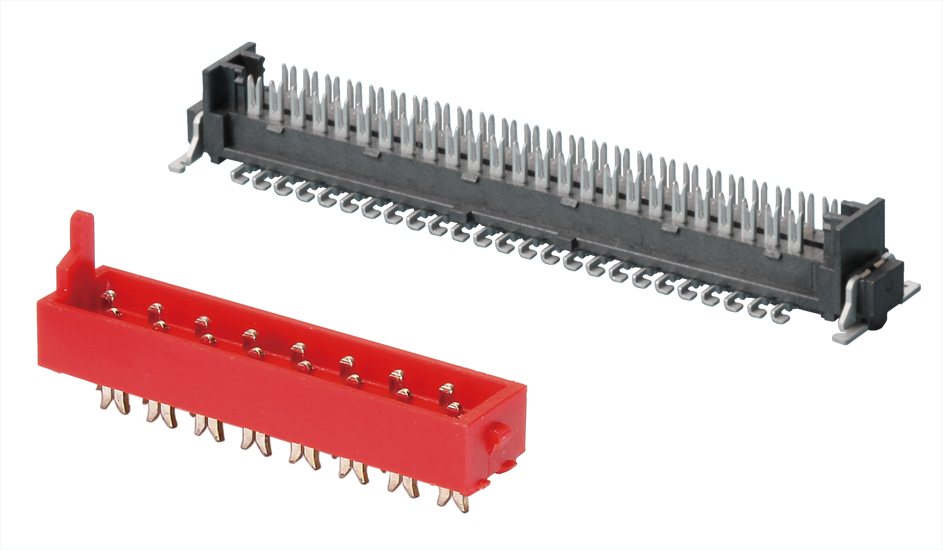
Insulation Displacement Contact Systems (IDC) are connectors designed with sharpened blades that strip the insulation of a cable during the connection process. By doing this, individual cables no longer need to be cut, striped and crimped before connecting which greatly reduces overall processing time.
RASTLINK
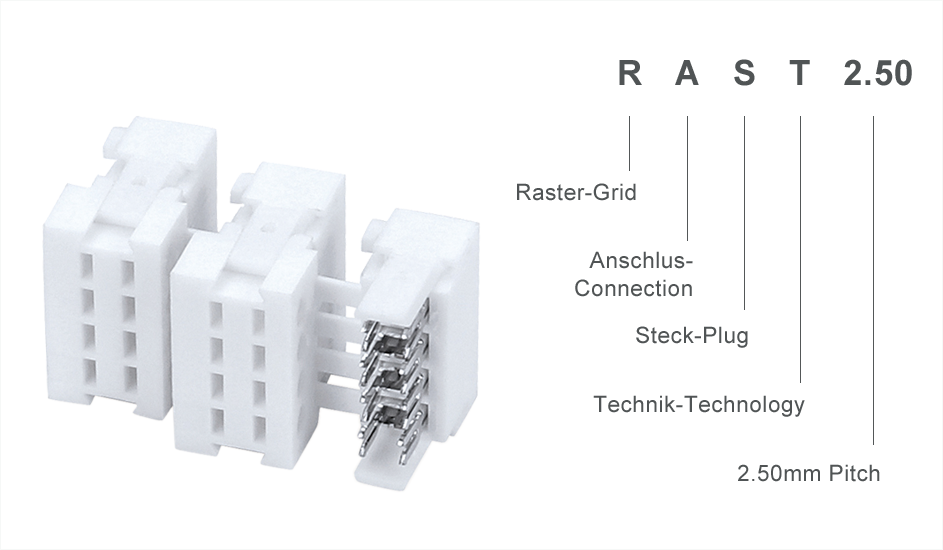
RASTLINK stands for Raster Anschluss Steck Technik and is the industry standard for home appliances. RASTLINK is typically followed by a numerical value which represents the contact centerline spacing (in millimeters) of a specific RASTLINK connector. For example, RAST 2.50 has a 2.50mm pitch. Please see the explanation:
Wafer
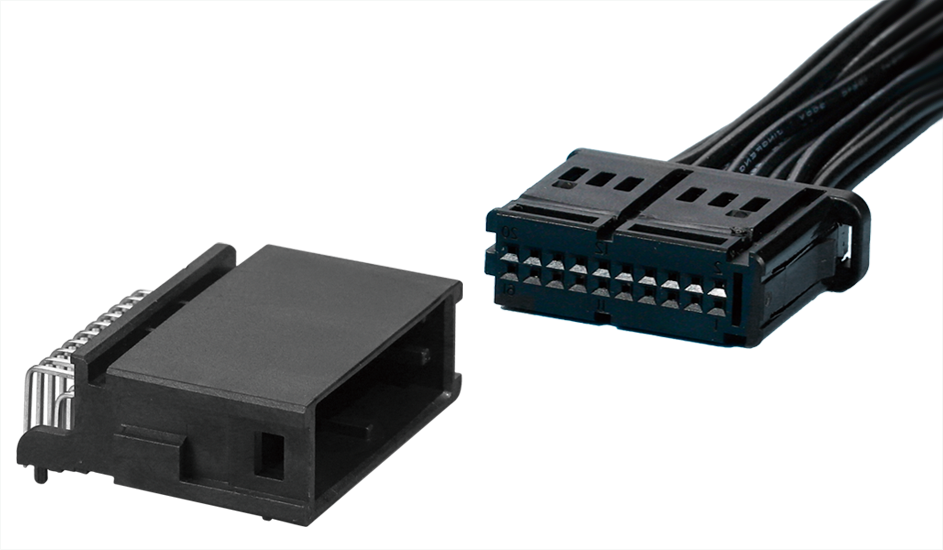
While very similar to headers, wafer connectors offer a more suitable option to better connect a wire to a PCB. Male connectors are attached to the PCB while female connectors are crimped to the wire. Because of this, no soldering is required for the female connector. Wafer connectors are also polarized making it impossible to incorrectly plug in the mating connector during the connection process. Another advantage of wafer connectors is that they are offered in the same pitches as headers making these two connectors entirely compatible with one another.
What are Wire-to-Board Connectors?
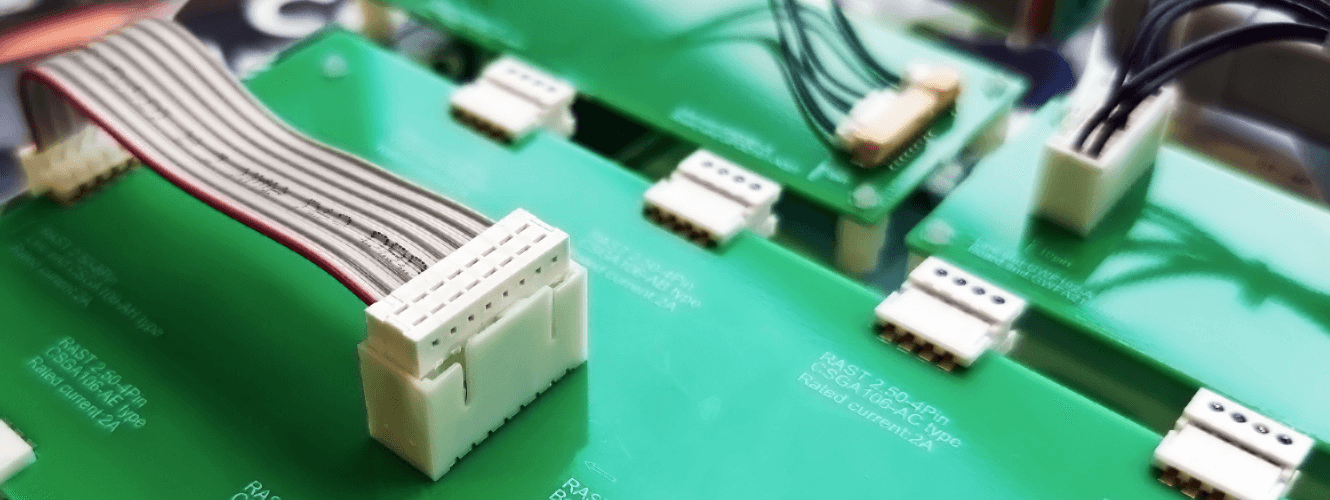
Wire-to-board connectors typically use crimp technology to allow the connection of a wire to a printed circuit board (PCB). Once the connector has been crimped to the wire, the contacts or terminals can then be inserted into the corresponding housing to complete the interconnect. Other wire-to-board connectors include IDC and SMT. Wire-to-board connectors are largely used due to their flexiblity and reliability. Greenconn's connectors can be used in low-profile designs which offer connectivity for underwater systems or systems in which space is restricted and require a more compact solution. You can count on Greenconn to always provide you a secure termination.
What are Benefits of Wire-to-Board Connectors?
Wire-to-board connectors are used to provide an inexpensive solution to route power between PCBs. These types of connectors can be used in the industrial, automotive, commercial and telecommunication industries. While wire-to-board connectors used to cause engineering troubles while being designed due to their bulky characteristic, new and improved wire-to-board connectors have been developed to provide compact solutions that can now fit in any compact application. Along with this new development, wire-to-board connectors have become more suitable for automated surface mount assembly allowing for a quicker assembly process. Even further, these connectors provide long-term reliable service for their applications. Overall, wire-to-board connectors offer simple, robust solutions while remaining cost-effective.